Recently, I asked my son to take his night meds, and his nervous system disability activated his fight-or-flight response. He pushed me, I fell, and then he hit and scratched, leaving red marks on my arms and chest.
Later that night, he texted to start the repair process, but I wasn’t ready. The wounds were too fresh, both on my body and in my heart.
The attack came from someone I love and trust not to hurt me. That’s what makes it so hard to process. I tell myself what I know is true: he has a good heart, he’s having a hard time, he has a disability, he’s a child. He’s trying to make it right.
But it still gets tangled up with my past.
When the Past Shows Up in the Present
I’ve been hurt before by people who were supposed to protect me. So when my son lashes out, my body doesn’t always recognize the difference. The fear feels familiar. My muscles tense, my heart races, and old memories stir.
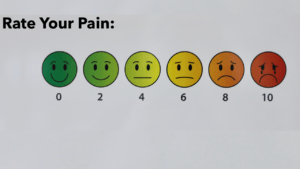
In therapy, I’ve been learning to separate those experiences. When I look down at a bruise from a flailing fist or a scratch left on my arm during a meltdown, the pain is real, but it’s not the same pain.
In the past, the people who hurt me were supposed to keep me safe. Their job was to care for me and make space for my feelings. Their failure to do that became its own kind of wound.
Holding the Right Responsibility
My son’s role is different. He’s not my emotional anchor or my healer. His only job is to grow into his fullest, most authentic self. That truth doesn’t erase the sting of his aggression, but it creates an important distinction. My body’s instinct to pull back and protect itself isn’t selfish; it’s survival. It’s my nervous system doing what it was built to do.
And the emotional weight of this moment is mine to carry, not his. It belongs to me and to the adults who support me—my partner, my friends, my therapist. My son deserves accountability, but not the burden of my pain. That distinction keeps me from confusing the present with the past and from collapsing into the old story that love and harm are intertwined.
When I can hold on to that truth, I start to feel steadier. I can care for him and love him, even while I’m not ready to repair.
When Repair Comes Back Online
A few days later, he sends me a text, his preferred way to communicate when feelings are too big:
“Hello mom… I want to let you know that I’m sorry for hurting you… and I promise I won’t ever do it again… I know it was SO wrong so wrong. Love always, xxxx.”
I write back:
“Dear xxxx, You are such an amazing person. You are loving, kind, funny, smart, and so many other things. I know you truly don’t want to hurt me. I love you more than anything, and I believe we can work through this together. You’re one of my most favorite people in the whole world. Love always, Mom.”
He replies,
“Ok mom thanks! That means the world to me. Do you want a gift for being such a nice wonderful caring supportive mom?”
I smile through tears and type back,
“Oh honey, the only gift I need is you. And you being willing to talk to me so I can help you. I truly want you to be happy and independent and knowing how much you are loved.”
“Okay… thanks mom,” he writes.
It’s such a small exchange, but it feels enormous. It reminds me that repair is possible. That when his thinking brain comes back online, love does too.
Love, Safety, and the Work of Differentiation
Parenting a neurodivergent child while carrying my own trauma means living in constant tension between tenderness and fear, love, and self-protection. But each time we find our way back to each other, I’m reminded that healing doesn’t mean never getting hurt again. It means learning, again and again, to tell the difference between the pain of the past and the love that’s right here in the present.
Bio of Liz Koch: Liz Koch writes about the messy, meaningful realities of life and neurodiverse parenting. She shares the chaos, the triumphs, and the lessons learned, offering an honest look at the daily balancing act between family, identity, and growth.
PDA North America is a 501(c)(3) non-profit organization that has supports and resources for Pathological Demand Avoidance/ Pervasive Drive for Autonomy. We provide resources for families, professionals and PDA individuals. Please consider a donation to allow us to better support PDA individuals.