Every year, the PDA North America conference is special. This year was absolutely magical. 🪄
Maybe it’s because it was my first conference serving as Board President of PDA North America. Maybe it’s because the community keeps growing. Or maybe it’s because something powerful happens when hundreds of people who have spent their lives feeling like they or their children are “too much,” “too difficult,” or “too complicated” finally end up in a room where they make perfect sense.
Whatever the reason, the 2026 PDA North America Conference was extraordinary.
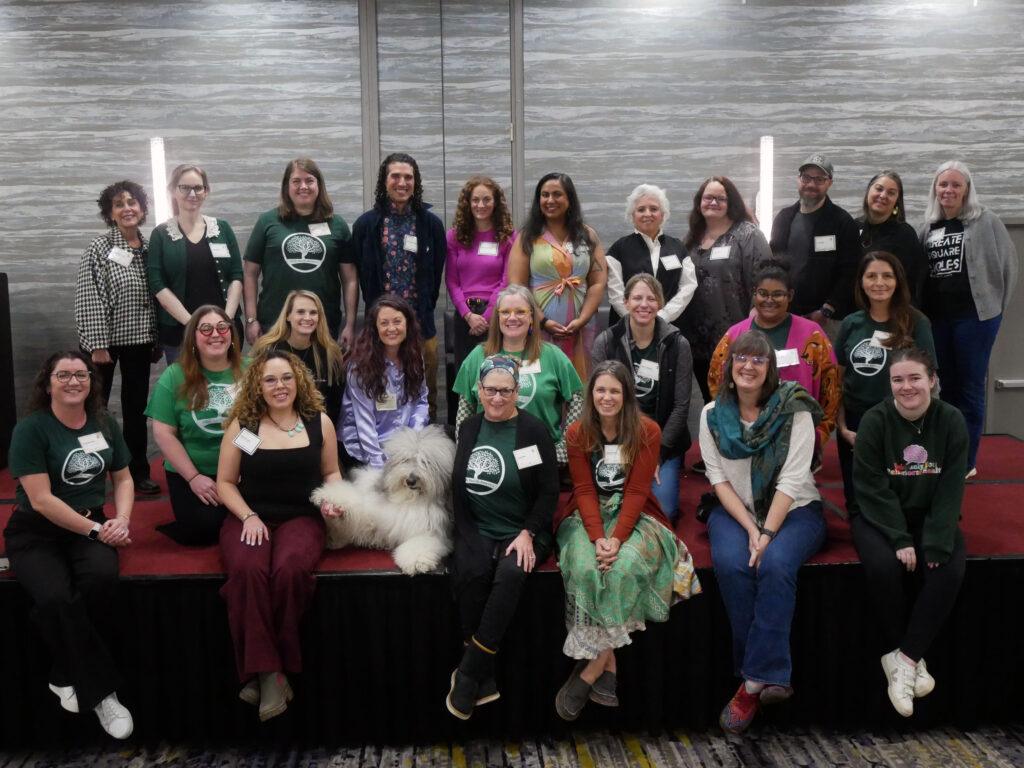
For several days in Chicago, the room was filled with clinicians, researchers, parents, adults with PDA, educators, advocates, and deeply curious humans. People came from all over the United States and Canada because PDA has a way of bringing people together who have spent most of their lives feeling misunderstood.
And what unfolded was something I wish everyone could experience.
Not just lectures and presentations (though those were incredible). Not just new research, frameworks, and clinical insight (though there was plenty of that,t too).
What happened was a connection.
Real connection.
The kind where people say things out loud for the first time.
Where clinicians quietly admit they’re considering checking the “PDA” box too.
Where parents exhale, relieved that someone finally understands their child.
Where adults with PDA begin to recognize that the lifelong narrative of “being broken” might actually be a story about a nervous system that has always been trying to survive.
Over and over again, I watched people slowly begin to unmask and show up honestly.
Sometimes that looked like someone sharing a story during a Q&A and ending up with a full support team around them.
Sometimes it was someone crying in the hallway after realizing something about themselves for the first time.
Sometimes it was late-night conversations about identity, autonomy, trauma, and what it means to build a life that actually works for a PDA nervous system.
And sometimes it looked like laughter so hard it bordered on delirium—the kind that only happens when you’re finally around people who get it.
There is something profoundly powerful about being in a room where the language of nervous systems, autonomy, masking, and demand sensitivity isn’t something you have to explain.
Where people don’t look at you sideways when you pull out yet another fidget or beverage.
Where someone understands immediately why “simple” things can feel impossible.
Where autonomy is not seen as defiance but as a survival strategy.
For many people, this conference wasn’t just educational.
It was validating.
It was liberating.
And for some, it was the first time they had ever experienced true community around this part of themselves or their families.
As a clinician, a parent, and someone who personally lives inside a PDA nervous system and checked that box for the first time, being in this space was deeply meaningful.
PDA North America has played a critical role in bringing awareness of PDA to the United States and Canada. For many families and clinicians, it was the first organization to say: there is another way to understand what you’re seeing. We’re here.
Watching the community continue to grow—and watching people find themselves inside that understanding—is one of the greatest privileges of my professional life.
But what stays with me most after conferences like this isn’t the presentations or the panels (though I cannot wait to rewatch them – they are incredible).
It’s the people.
The clinicians are doing the brave work of examining their own neurodivergence.
The parents are advocating fiercely for their kids.
The adults with PDA are rewriting the narrative of their lives.
The hallway conversations.
The shared language.
The moments of recognition.
And the quiet understanding that none of us is doing this alone anymore.
Leaving the conference always comes with a strange mix of emotions.
Deep inspiration.
Exhaustion.
Hope.
Grief for the years people spent misunderstood.
And excitement for the future we’re building together.
The work ahead is big. There is still so much to learn, research, advocate for, and build.
But if the 2026 conference showed me anything, it’s this:
The PDA community is full of some of the most thoughtful, creative, passionate, and brilliant people I know.
And I cannot imagine a better group of humans to be on this journey with.
I can’t wait to continue the wonderful connections and to hear from more of you.
I’m already looking forward to the next one. Onward to 2027. See you there!