the holidays are marketed as a jolly serotonin binge meant to bring people together, fill your heart with love, help anyone in need, find redemption and self-actualization, and deliver everything you ever wanted (no pressure!). for some families it is a magical time full of extra fun and connection. but for PDAers and those who love them, it’s a double-edged sword: a season of sensory-seeker dopamine binges, endless expectations, inauthentic posturing, and complete disregard for the stirring of grief over lost loved ones, financial stress, or anything that doesn’t fit the perfect christmas-card image. the cognitive dissonance hits hard.
we spent years trying to get that “christmas magic” right. no matter what we did, it ended in dysregulated meltdowns and tears (kids and adults). how, in a season full of joy at our fingertips, could i not give my kiddos some holiday happiness? i felt like a total failure. and then i stopped trying. i stopped trying to make my life fit into some “hap-hap-happiest bing crosby tap-dancing christmas.”
it didn’t happen overnight. it happened one meltdown, one revelation, one “WTF, why does this feel awful when it’s supposed to be fun?” at a time. but over the years, we’ve pivoted. we’ve shed the traditions that made us tense, overstimulated, or resentful, and created new ones that actually work for our PDA family. and strangely, beautifully, it’s made our holidays feel more like us. if any part of this resonates with you, know that you’re not alone—and that it’s okay to set down the book of expectations, even just a little, and give yourself permission to be.
minimal decorations with maximal ownership
we don’t do outside lights- we have minimal light-appropriate landscaping, they’re hard to string, it takes a ton of time to get up AND down, and in a 90 year old home, you’re more likely to fall off the roof slope than make some christmas magic. do we miss it? absolutely, but right now it’s not accessible and we’re okay with that. instead, we keep it simple: 2 giant lit wreaths on our home. and for the big lights? we make it a tradition that one evening we bundle up with cocoa and walk in our neighborhood to “lightpeep” and go see the professional lights nearby–why compete with the magic of 745,994 lights when you can just enjoy them, no untangling necessary.
instead, we started a tradition that actually works: painting the windows.
each family member gets to decorate their bedroom windows however they want, holiday-themed or not. We sketch them out on paper and then have them draw on the windows with paint makers. it’s a low cost, high reward activity that is really PDA-friendly. this year’s themes? holiday animals, winter trees, squishmallows, minecraft, snowflakes, axolotl, yetis sledding, pineapples and the neurodivergent symbol of christmas: the charlie brown christmas tree. it’s creative, it’s contained, it’s fun, and it’s theirs without the expectation of “the way” to decorate. they can play their own music, we put out snacks upstairs in the hallway to eat while we paint and we all get to decorate the way we want. Connective parallel play for the win!
the sacred PDA holiday duo of home alone 2
other households may have the hallmark channel on 24/7. in our home, at any month, but especially when the weather gets cold, we go Home Alone 1 & 2. the joyful echolalia it brings between us is one of our favorite connecting bits we do with each other that is somehow in the middle of the PDA-regulation venn diagram for not setting anyone off. one will echolalil and be met with another line, somehow in connection, even if not in movie context:
- “easy on the pepsi, fuller!”
- “I’m 10—TV is my LIFE!”
- “look what you did, you little jerk!”
- “ma’am, i’m eight years old. you think i would be here alone? i don’t think so.”
- “merry christmas, ya filthy animal!”
- “what kind of idiots do you have working here? the finest in new york!”
- “two? make it three; i’m not driving.”
- “this is peter mcallister, the father”
- “credit card? no problem!”
my mother used to say that the first sign of christmas was when santa crossed the line at the macy’s thanksgiving day parade. for us, it’s when one of my kids launches into the entire “angels with filthy souls” smooching list from memory with his own flip in it:
“you’ve been smoochin’ with everybody! little moe with the gimpy leg, snuffy, al, leo, cheeks, boney bob, cliff. i could go on forever, baby!”
the nostalgia? the predictability? the humor? the rule-breaking chaos without real consequences? Oh SO PDA.
We pair it with marathons of old favorites; we decided as a family last year that a christmas story is as close to a reflection to our lives than any other), and newly found weird gems—like click clack moo on amazon, which fits our vibe of heartwarming oddity perfectly.
christmas tree truce
decorating the christmas tree was like a battle negotiation for hostages. something waxed-poetic as a calming and connecting family tradition felt more like the war room. who got what ornaments, who put what on first, who’s is better. it was exhausting and inevitably ended in meltdowns. how can something as simple as taking ornaments as a family become an episode of survivor so quickly?
after a few bewildered and confused tree trimmings, i remembered my mom had 20 christmas trees in our house when we were kids, including one in each kid’s room. a light bulb went off and one mini christmas tree sale later i had 2 four-foot pre-lit trees that give me peace in the season. now each kid gets their own tree in their room and can place their unbreakable ornaments on them. we make sure theirs are decorated first and then they have the option of helping us with the big tree. we finally have peace because it’s low demand, it gives them decoration autonomy and structure of their little piece of the holidays. most importantly, we’re able to get through tree trimming without tears. sometimes, they even lose interest and us boring adults can enjoy it with some john denver christmas in the background. this is also a good pre-christmas gift that’s a dopamine hit, peacemaker and quells the equalization-anxiety.
no christmas lists here
my kids cannot access making christmas lists. as a late 80s/90s kid who foamed at the mouth for the sears catalog, this was something that took a lot to wrap my brain around. i figured endless choice + dopamine to the max = sounds like a dream. and for them it was…a nightmare. turns out endless choice, even at christmas where everything is on the table technically, is demanding. the very act of naming wants can feel like a trap, an emotional demand, or pure excitement into overwhelm. it doesn’t sound too fun when you put it that way.
so we dropped it….mostly.
the grandparents still want lists though, so we’ve become creative so it doesn’t feel like a demand for them (or me). We:
- take photos throughout the year when we see things they like in stores. this also helps when they really want something knowing this is put on the list for holidays, birthdays, or whenever they have money to spend.
- sit down together to look through “best of” lists put out on websites for their ages to help them with jumping off points. my kiddo themselves saw a remote controlled car and said, “oohh! i like that remote control car…actually, could i get a remote control helicopter that i saw that one time?”.
- think about our special interests– axolotls, painting, instant photos, pompoms, squishmallows, minecraft are our big ones this year.
- make pinterest boards for grandparents to keep gifting and sharing easy from multiple stores and sites.
most importly, we talk with the kids ahead of time to choose three presents they will definitely get that are in a certain range. before we did this we found our kids in every gift hiding spot, scavenging like christmas raccoons trying to find any peace of confirmation of getting anything they wanted. surprises can be stressful. knowing in advance isn’t spoiling the surprise, it’s lowering the anxiety and upping the sense of safety in knowing.
these are also easily modifiable for birthdays and other gifting-holidays. who says you can’t do an advent birthday calendar or a birthday stocking? which, important sidenote: birthday stockings are the best and i highly recommend them for PDAers of all ages.
f-the rules! find the joy.
no santa, all spirit
we don’t do santa in the traditional sense.
as a PDAer myself, finding out the truth felt like betrayal where everyone else was in on the truth and lied at my expense and it opened the door to the realization that adults lie about a lot more. i had a feeling my kids might be the same in mindset, so we scrapped santa and told our kids the story of st. nicholas, explaining that anyone can be santa if they embody the spirit of generosity.
we also make it central in our home that we are born good, we die good, and we are always good—always separate from behavior. PDA brains do not deserve to be punished with “naughty and nice” surveillance culture, which only will cause more anxiety, shame, and meltdowns. and honestly, the idea of someone watching you to assess your worthiness? (especially in these current times?) hard pass.
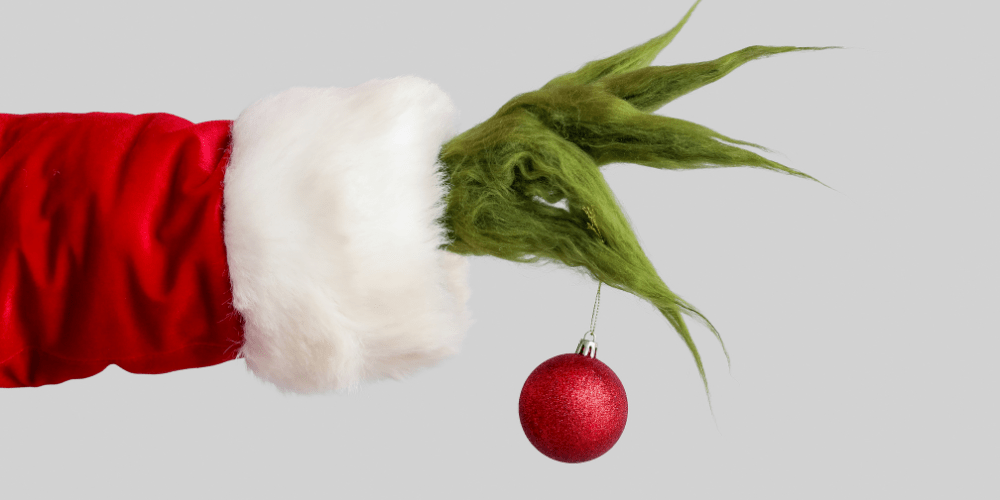
the grinch: our patron saint of PDA christmas
my oldest has been obsessed with the grinch since he was a toddler—specifically the 2000 jim carrey movie version. and honestly, it feels perfect that in a year when he seems to be in a race for publicity with santa, we remember that the grinch is fundamentally anti-capitalist and deeply, amazingly PDA-coded.
he’s over the BS of holiday social expectations and the forced participation in staged community rituals that have none of the real emotional depth. the noise, packages, boxes and bags—it’s all too much. he needs control in overwhelming situations, meticulously planning and organizing, creating rules to ground himself. as a child, much of what was seen as the grinch’s meanness also looked pretty familiar to what i’ve seen in my house as overwhelm-fueled dysregulation and meltdowns. and the whos did not give him the benefit of the doubt and misjudged him. and beneath it all, he carries a deep but guarded empathy, wrapped in a protective exterior and a heart-forward truth. sound familiar?
in this version the grinch uses humor and sarcasm to deflect demands; sabotage when pushed too far (ruining the holiday cheermeister ceremony and later stealing ahristmas); retreat and isolation by living on mount crumpit, and the over-the-top performance when he’s overwhelmed and trying to regain any sense of control. the world is too much and can’t meet his demands for honesty and authenticity, not spectacle. we talk about why he feels the way he does, the power of connection, and the beauty of being understood like he is by cindy lou who (who is also PDA-coded).
and this year, the grinch really is everywhere. our had at least a dozen in our holiday parade, and you know it’s gone fully mainstream when he shows up at mcdonald’s with his own 2 part meal deal. a part of me hopes the kids get it and that maybe the era of the shallow, performative, perfect-looking christmas is fading for something maybe more messy, but more loving and real.
if you haven’t watched that version with your family yet, merry grinchmas.
welcoming yule & the winter solstice
ritual can be incredibly grounding for PDAers when it can hit the right amount of dopamine and autonomy. in the past few years, we’ve started weaving new and once-unfamiliar traditions into our winter season. the kids celebrate the solstice at school as an activity and we’ve brought that ritual home: a magical evening open-house at a friend’s home with friends, snacks, wassail and songs. we release what we no longer need, call in what we want more of, and settle under a bonfire for cozy conversations that feel both steadying and enchanted.
afterwards, a group of us goes wassailing around the neighborhood—something my PDA kids adore because it’s this perfect blend of connection and mischief. delighting unsuspecting neighbors with festive songs or watching them scramble behind their curtains to avoid being seen? either way, it’s a win-win.
the wassailing around the neighborhood may be a harder sell, but the yule log burning can be an easy, but powerful lift in the season. at it’s simplest, is a fire pit and a dried log. throw it into the burning fire on the winter solstice (or whenever you feel called to!), and say in your head what you want to release the following year. watch it burn along with whatever you no longer want- no judgement. no asking. no demand.
spoons, interest and regulation dependent, you can adapt this on any level to your needs, because ritual, at it’s core, is for yourself.
scream what you want to release out loud while watching the fire burn if it feels cathartic.
maybe you or your pdaer feel safety in symbolism, which can feel grounding in connecting to nature and something bigger than ourselves. in that case, look up the different meanings of items you can include on it: 3 tapered candles for the elements; cinnamon sticks for good fortune; herbs like rosemary or some pine boughs for protection and positive energy, and place out bunches of each, so each family member can make their own yule log to burn, or place what they’d like on the one log that you all burn together. once the log(s) is/are decorated, tuck (or tie) written wishes of what you’d like more of in the new year on the log. this may help pdaers feel a sense of control in a time of the year that can feel very lonely and introspective.
if they’re not into any of it? lighting a bright hot fire outside in the cold on the longest night of the year feels extra special for us and while social, is very spoon-giving.
the feast of seven fishes simplified
i grew up with a loud, hours-long christmas eve feast of seven fishes: chaotic, joyful, and absolutely impossible for my family to do now. we tried to do it once with my multigenerational italian family, and when it ended with us all in tears, we vowed to find something that felt right for what we needed. we keep it open every year based on how many spoons we have, but often include a variety of apps and snacks like mozzarella sticks, meatless antipasti, baked clams, fried calamari, pasta or homemade pizza, and a platter of italian cookies–also, in full self-awareness this is a low lift for our family and may likely be impossible for someone else’s. my kids don’t touch grilled cheese, but love fried calamari, but i digress!
some years the kids even feel regulated enough to sit in the kitchen and make their great great grandmother’s knot cookies with me together. some years we invite friends to celebrate and some years we enjoy it all our own. it’s not what my idealized vision of the festive culinary feast a christmas eve i daydreamed about as a prep cook while deveining pounds of shrimp for someone else’s meal back in my 20s, but, it’s flexible, manageable, without expectations, and ours.
making the holidays our holidays
my family’s holidays don’t look like the ones on TV specials, the magazine pages i’ve worked on, or in the holiday books i’ve read. they don’t resemble the ones i grew up with in my own childhood. they don’t fit into the mould of any tradition. and they’re not the ones as a pdaer myself that i expected to have.
having PDA kids has shown me that my expectation of holiday perfection needs to be less important than my goal of having a nice holiday where everyone feels connected, seen and loved.
are some of the things we do things I would rather not? yup. is it all how i’d prefer to do it if i could write my own pda reality? nope. but if i can keep my idea of what is the most important thing- not how they look or what exactly the holidays are, but how they make every one of us feel… all without, hopefully, someone losing their sh*t, i can feel happy in my own reality even if it’s not the same as what other families experience.
and for those that might be feeling more blue or green at the holidays: it’s okay to feel grief or envy over life and the holidays not looking like maybe you had it in your brain. PDA makes every expectation change and there is grief that, even at the holidays, life can look so different and feel less than ho-ho-happy. it’s okay to feel that way. i tried for years and did not get anywhere. eventually, when i gave up, i learned to put the “shoulds” down and to take what brings a little light. if something resonated here, i hope you can hold onto it because you deserve joy in your world and peace in your place on earth.
About The Author:
Lauren Brown (she/they) is a heart-forward nonbinary, queer neurodivergent person who thrives in big ideas, challenging neurotypical norms everything, and connecting to others. Lauren understands neurodivergence from all sides as a proudly late diagnosed PDA AuDHDer living with OCD, mother to 2 amazing PDA AuDHD kiddos, spouse to an AUDHDer, and a Sib (sibling of someone with a disability). As someone who has spent her life advocating for themselves and others, she’s passionate about providing warm and safe support to those journeying for answers that may empower them, their loved ones or clients to move through the world in a way that feels true to themselves.
After a lifetime of being told they were too sensitive, too angry and everything in between, Lauren found a homecoming in their diagnosis. Now she is thrilled to spend her time with PDA North America guiding others to the support they may need to empower themselves so that others do not have to feel the painful loneliness of being PDA in a world that can oftentimes feel cruel in its judgement and misattunement. Lauren is adamant in building strong neurodivergent identities and culture through radical community building, mutual aid, and meaningful connection without shame.
Like a true autodidact, Lauren’s passionate side quests have led her down a lot of different exciting paths. 3 different colleges in 3 years had her finally land at The Culinary Institute of America, where she took her degree in culinary arts and paired her love of food, travel, storytelling and accessibility through the pages of national magazines & books, television, radio, food & beverage public relations, event design, urban dairy yogurt production, energy healing, neurodiverse organizing and wedding planning. Regardless of what they’ve got their hands into, Lauren loves connecting people, bringing a little more love into the world, and helping people feel truly seen and heard.
When Lauren is not helping at PDA North America, they are part of the wonderful team at Neuron & Rose Psychology and run a local neurodivergent support group. In their free time, Lauren is dedicated to living a vibrant and connected life outside of neurotypical expectations; believing that we can find ways to thrive when we move in the motion of what feels good for us, instead of life’s “shoulds”. Lauren lives with her 2 kids, a loyal dachshund, Gator, and her husband, Jake, on Mahican, Lenape, and Munsee land in New York’s Hudson Valley.
PDA North America is a 501(c)(3) non-profit organization that has supports and resources for Pathological Demand Avoidance/ Pervasive Drive for Autonomy. We provide resources for families, professionals and PDA individuals. Please consider a donation to allow us to better support PDA individuals.