If you’re parenting, caregiving, or supporting a teen with Pathological Demand Avoidance (PDA), you’ve likely heard some version of: “They just need more structure” or “They need consistent consequences” or even, “They’re choosing not to do it.”
But we know this isn’t defiance at all. It is a biological factor that they are born with, and it is how their nervous system responds. If your child doesn’t get the early foundation of PDA and is finding diagnosis later in their lives, then this is where the conversation around PDA needs to shift, especially in the teen years.
PDA Isn’t About “Won’t”—It’s About “Can’t (Right Now)”
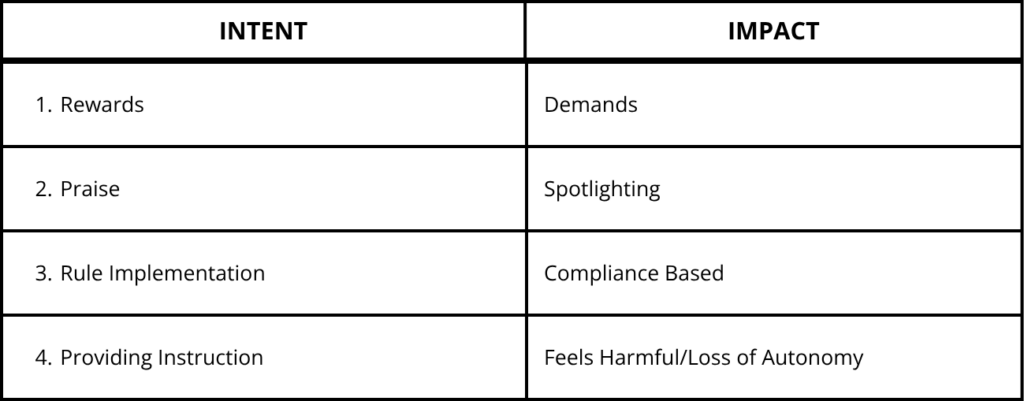
At its core, PDA is rooted in an intense need for autonomy. When something feels like a demand, no matter how small, it can trigger a threat response. This isn’t about motivation. It’s about perception of control and safety. These behaviors are not intentional defiance. They are protective responses.
This is where we want to examine INTENT VS. IMPACT
Why the Teen Years Make Everything Harder
Adolescence adds layers of complexity that can intensify PDA. There are increased expectations (academics, independence, social demands), greater self-awareness and comparison to peer, burnout from years of masking or pushing through, and reduced external supports compared to childhood. At the same time, many teens are just beginning to understand their neurotype. This leads to a unique and often painful reality:
They are expected to function independently before they’ve had the chance to build a solid foundation.
Not every individual learns about their brain during early developmental stages. Many families are navigating PDA for the first time during the teen years—which means both the teen and the parent are learning simultaneously. This isn’t just a skills gap. It’s a foundational gap. Instead of refining independence, you’re building: self-understanding, emotional awareness, regulation strategies, and trust in support systems. All while the outside world continues to increase expectations.
One of the most important, and often overlooked, realities is that PDA rarely exists in isolation. Many teens also have: autism, ADHD, anxiety, trauma, sensory processing differences, and chronic health conditions. These overlapping factors don’t just add up, they also interact. This is why: one strategy works for one teen but not another, presentation can vary widely, and traditional, standardized approaches often fail. Understanding the full neuro-complexity profile is essential to providing effective support.
Why Teens Resist Help (Even When They Need It)
This is one of the most frustrating dynamics for families. You’re trying to help—but your teen resists. Why? Because help can feel like: control, pressure, a reminder of past failures, and pattern recognition (they know what you are going to do before you do!) And when autonomy feels threatened, the nervous system responds accordingly. Resistance is often not rejection; it’s protection.
If there is one shift that changes everything, it’s this: moving from control → collaboration. Buy-in doesn’t come from: better explanations, more consequences, or increased pressure. It comes from felt safety and autonomy. Some simple but powerful shifts: replace directives with curiosity (“What feels hardest about this?”), invite collaboration (“How can we make this easier together?”), and validate before problem-solving.
Connection is not separate from progress; it is what makes progress possible.
We often define independence as doing things on your own. For PDA teens, a more accurate and supportive definition is, knowing how to access support without shame. Independence is built through, co-regulation → self-regulation, safe relationships, and gradual capacity building. Not through forced compliance. Effective support strategies tend to share one thing in common- they reduce nervous system load. This can look like: collaborative language, flexibility in expectations, offering choices, using humor or playfulness, reducing unnecessary demands, and taking out power dynamics – perceived or established.
These approaches are not about lowering expectations. They are about making expectations accessible and realistic for the individual. Many traditional approaches rely on compliance-based models, including: punishment-first strategies, power struggles, “because I said so” dynamics, and pushing through shutdowns and burnout. For PDA teens, these approaches often escalate rather than resolve challenges. It is also a large antecedent to continuing relationship fractures rather than creating repair.
Repair Matters More Than Perfection- Repair Is EVERYTHING
There will be hard moments. There will be missteps and mistakes on both sides, and that’s okay. What matters most is repair. Saying, “I think that felt overwhelming” or “I want to understand what happened” builds more trust than getting everything right the first time. Being vulnerable yourself is one of the most powerful things you can do to open up any moment. If you are navigating PDA in the teen years, you are not starting too late. Rebuilding a foundation is always an option. You are starting where you are, and where you are starting is a personal journey that is your path alone. What matters most is that you have chosen repair, you have chosen to support your teen, and you have chosen love. And that matters.
About Calial McCarty
Therapist, author, advocate, speaker, and founder of McCarty Therapy Solutions, focused on supporting neurodivergent individuals and families through connection-centered, neuro-affirming evidence-based approaches. Calial herself is AuDHD and PDAer. She is a parent to two children who have multiple neurodivergent diagnoses including PDA.
PDA North America is a 501(c)(3) non-profit organization that has supports and resources for Pathological Demand Avoidance/ Pervasive Drive for Autonomy. We provide resources for families, professionals and PDA individuals. Please consider a donation to allow us to better support PDA individuals.